
Artificial intelligence improves real-time drilling data analysis;SpaceX celebrates major progress on the third flight of Starship

Artificial intelligence improves real-time drilling data analysis
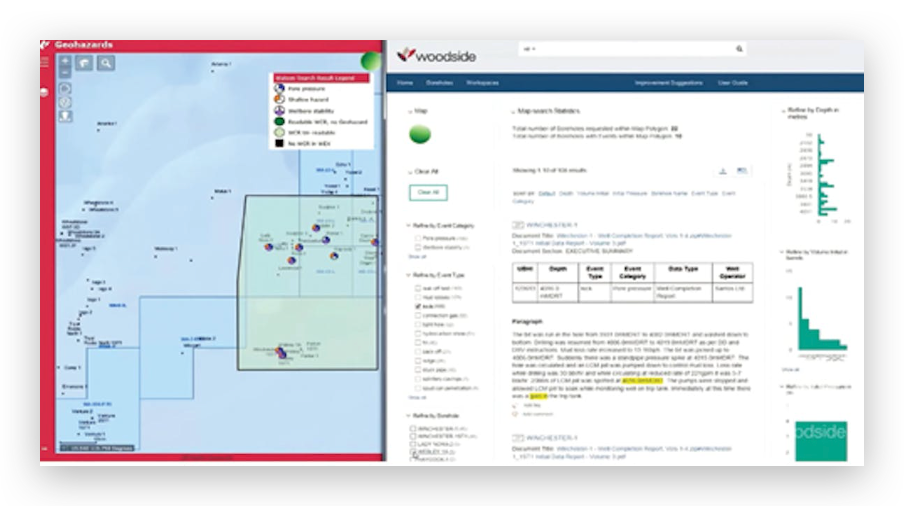
As well requirements become more rigorous and drilling capabilities expand, the industry faces new challenges necessitating better collaboration and shared insight during operations. The increase in data from historical wells and sensorized drilling equipment have opened up new avenues for insight but also demand new decision support technology. AI plays an integral role in mining both historical and new big data sets for improved decision-making.
Two AI-supported technologies—natural language understanding and machine learning—find relevance in well delivery processes. The article further unfolds the use of these technologies through examples such as Woodside’s 'Watson for Drilling' and cases regarding real-time data pattern analysis.
The same technology is also seen to complement traditional first principle models. While the AI models may be 80% ready-to-move, some adaptations are required for satisfactory precision and recall.
New site formation, well plans, rig parameters, and new streaming data from drilling commencement are essential to finally calibrate the AI model. The article envisions using AI to analyze unexplored data sources and integrating high-fidelity sensor data to suggest 'next best action' leveraging natural language understanding in drilling areas.
The next frontier lies in capturing comprehensive well delivery processes into an AI-fueled digital twin vision. Although AI is making strides, obtaining competitive advantages hinges on the ability to effectively utilize and combine data and services.
Voyager 1 starts making sense again after months of babble
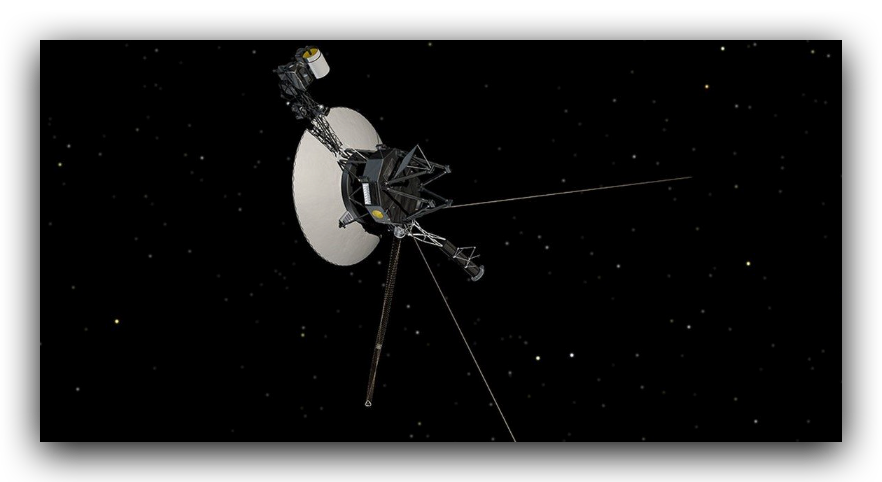
On March 1, the Voyager team sent a command, known as a "poke," to the spacecraft's Flight Data System (FDS), attempting to override whatever had become corrupt in its software. On March 3, the team received a different data stream from Voyager 1 which had previously been unreadable since December.
An engineer with the Deep Space Network (DSN) was able to decode it, determining by March 10 that it contained a complete memory dump from the FDS.
This memory read-out holds the FDS's code, variables, and the data necessary for downlink. Dr. Suzanne Dodd, the project manager for the Voyager Interstellar Mission, mentioned that the data being transmitted from Voyager 1 wasn't precisely as expected, but it was indicative that the FDS was partially functional.
The next steps involve comparing the memory read-out to a version transmitted prior to the issue. Following the comparison, a solution can then be devised. However, the navigation of these issues isn't straightforward due to the time lag, with communication taking 22.5 hours to go either way.
This results in a 45-hour wait time to see the outcome of any command. Furthermore, the availability of experienced engineers is declining since many team members from the initial Voyager 1 launch in 1977 are no longer active. Furthermore, the existing team is tasked with examining decades-old documents to solve unforeseen problems.
GPU & Accelerator process monitoring for AMD, Apple, Huawei, Intel, NVIDIA and Qualcomm
The page is about the GPU & Accelerator process monitoring tool which supports AMD, Apple, Huawei, Intel, NVIDIA and Qualcomm GPUs and accelerators. This tool, NVTOP (Neat Videocard TOP), follows a similar display to htop and can be used to monitor multiple GPUs.
The page provides detailed information on NVTOP's features, how to use it, and its compatibility across different devices. Installation processes for different systems like Ubuntu, Debian, Fedora, Red Hat, CentOS, OpenSUSE, Arch Linux are given in detail.
SpaceX celebrates major progress on the third flight of Starship
The article outlines how, following liftoff from South Texas, the Starship embarked on a half-world voyage demonstrating its ability to carry heavy payloads into low-Earth orbit. Despite a few hitches, including having to postpone the liftoff to clear boats from restricted waters near the launch base, this launch saw SpaceX meet several of its goals.
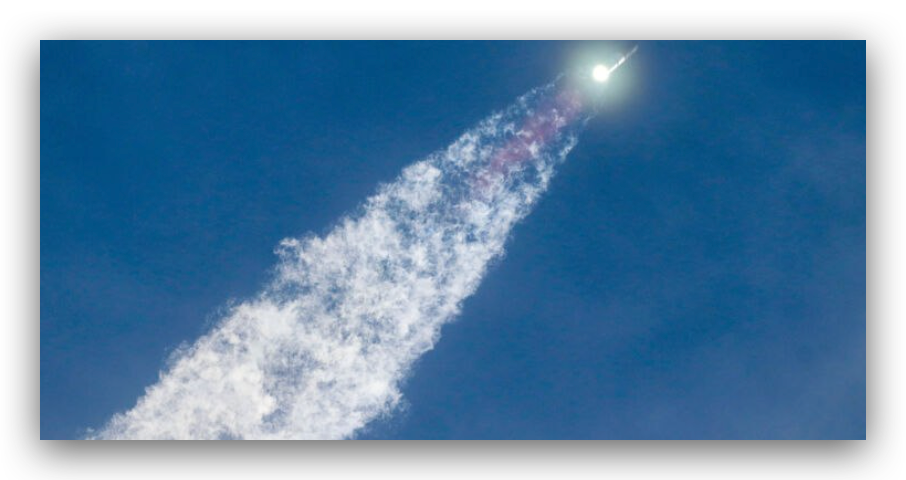
Notably, a vital accomplishment was the proof that the Starship can reach orbital velocity. It also managed to perform a test of the payload bay door, which will be tasked with depositing satellites into orbit in future missions, and successfully carried out a precursor test of more ambitious in-orbit refueling tests planned for the years ahead.
Overall, while some targets were missed, this third successful launch and flight marks significant progress for SpaceX's Starship and illustrates the real potential of the project. The article also mentions the future role of the Starship in missions to land astronauts on the moon for NASA and for building Elon Musk’s desired Mars settlement.